
Narrative Trauma Work –
What ist NAT?

The outcome of successful NAT work is the prevention of emotional and physical illnesses and the re-awakening of your unique resources




What is Narrative Trauma Work – NAT?
Narrative Trauma Work - NAT was developed to identify and support individuals affected by trauma and social stressors through an effective screening and counselling approach early on - before psychological and physical illnesses can manifest.
This target group of highly burdened individuals remains largely unrecognized within our conservative healthcare systems globally. Consequently, not only do individuals fall ill, but cycles of transgenerational violence and suffering are maintained and perpetuated into future generations.
Narrative Trauma Work NAT is human rights advocacy, as well as psychological counselling. The resulting testimony bears witness to experiences of victimization and de-humanization at the lowest threshold public mental health service level.
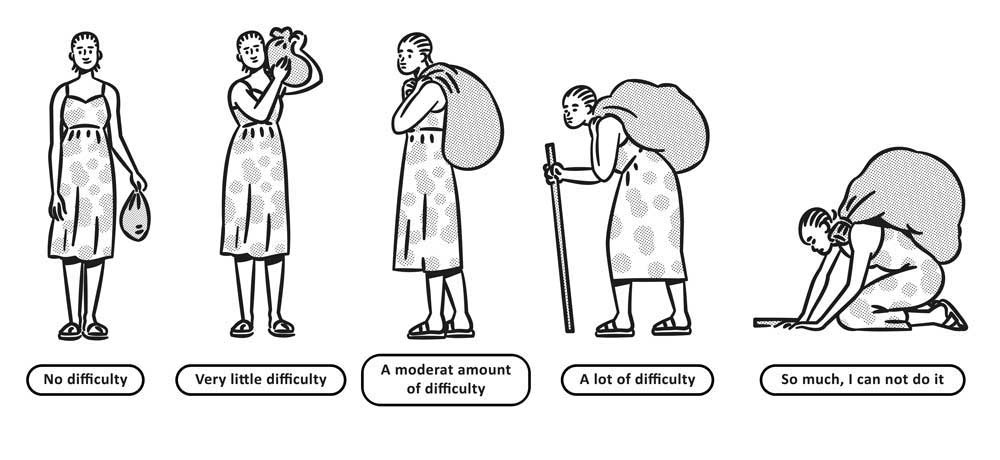
Accumulation of burdens in the backpack of life
NAT originates both scientifically and clinically in the groundbreaking principles of Narrative Exposure Therapy (NET).
The aim of NAT is to reduce, stone-by-stone, the individual building block that has formed through experiences of violence, abuse, neglect, severe stress, and social pain – often beginning in childhood and continuing throughout life – through the process of Narrative Biography Work. The outcome of successful NAT work is prevention of psychological and somatic ill-health and strengthening of effective self-efficacy.
NAT sessions: Four steps
Within a safe, effective and short-term four-step process, guided by an easy-to-understand traffic light evaluation system, burdened individuals are identified and significantly supported within just a few NAT sessions:
- Health and Safety Screening (population-based or individual):
Do you need help? And if 'yes': What type of help?
Initiation of support based on a simple 'traffic light' evaluation - Checklist Interview:
What happened to you in life? How heavy is the backpack of your experiences? - Laying the Lifeline:
When and where did the most important events of your life take place? Let's create a 'roadmap'. - Narrative Exploration Sessions:
Let us talk about these most important experiences of your life. I will document and acknowledge your testimony.
NAT enables clients to achieve biographical integration and radical acceptance of past life events. NAT can be integrated both in population-based service provision, within e.g. a public mental health system, as a stepped-care intervention, or individually applied in psycho-social case work and in private practice.
Especially social peers, but also non-specialist providers from diverse health and social fields as well as individuals from the legal and educational sectors, and community helpers are invited to learn and offer NAT in their respective contexts.
Just as with NET, the NAT learning platform stays open-access. Once providers feel they have gained solid understanding of the application of NAT, they are invited to teach the method onwards to clients and communities in need, all around the world.
The NAT Training will be facilitated by our senior NET Institute trainers and originators of the NAT method.
Each Input Day includes a rich mix of lectures, demonstrations, practice sessions in small and large groups, and guided discussions. The model follows our successful NET training structure and combines self-exploration with adult-learning principles.
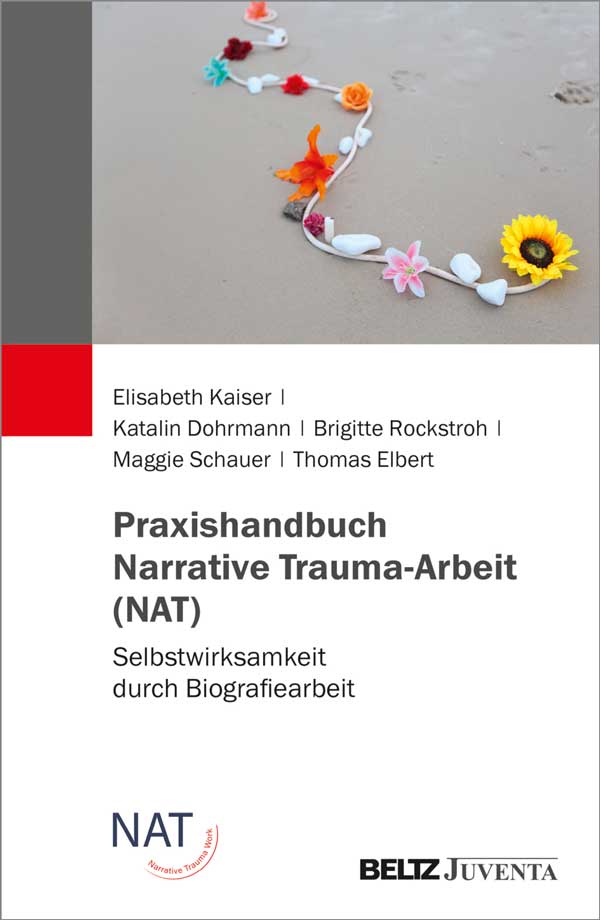
The training is based on the following publication in German laguage:
Kaiser E., Dohrmann K., Rockstroh B., Schauer M., Elbert T. (2026): Praxishandbuch Narrative Trauma-Arbeit (NAT). Selbstwirksamkeit durch Biographiearbeit. Weinheim und Basel: Beltz Juventa
English version is currently in preparation.